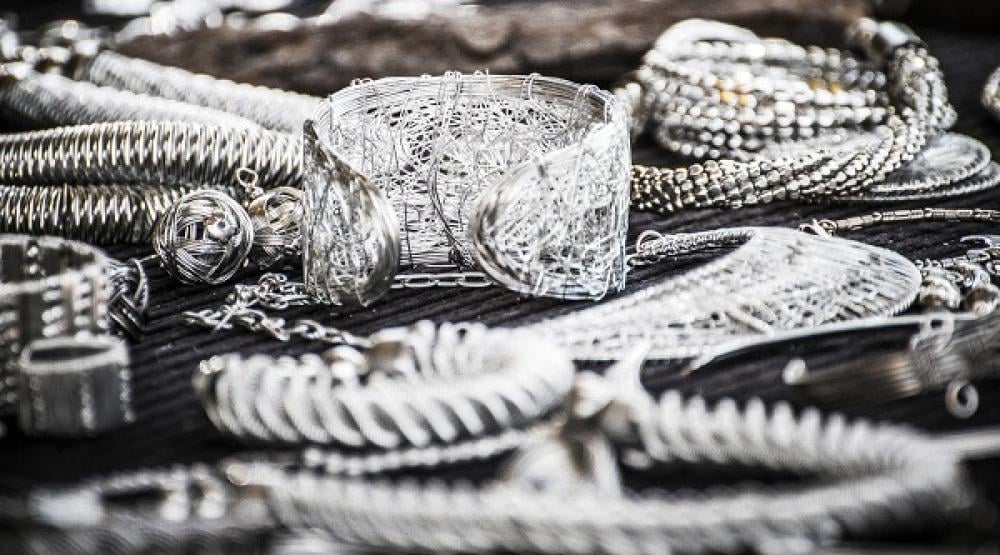
After gold, silver , which we explain the difference between real and fake silver, is the second most popular precious metal for investment. It is a reliable and attractive metal with many industrial applications, making it highly valuable and in high demand. However, as with other valuable items, silver can be counterfeited.
When people don't know what to look for, they can accidentally fall into the trap of these fake silver bars and coins, and as a result, their investments become worthless. Fortunately, silver is a unique element with properties that are difficult to fully replicate, and this means that with some careful attention, you can learn how to distinguish between real and fake silver.
Read also: Buying and selling gold in Saudi Arabia | What is the best time?
Is there such a thing as 100% pure silver?
As for the purity of silver, you will never find investment-grade silver coins and bullion made of 100% pure silver. This is because pure silver is too soft and brittle to be shaped into a coin or bullion. Like gold, silver must be mixed with other metals, such as copper or zinc, to maintain its durability and prevent it from scratching easily. Investment-grade silver coins and bullion are known as pure silver and are usually 999.9 or 999.0 purity. Sterling silver, which is often used in jewelry, has a purity of 925.0.
Read also: Investing in silver | Why should you buy silver jewelry?
How to tell the difference between real and fake silver?
Keep the following in mind when buying silver to avoid counterfeit products:
- Official stamps: In most cases, pure silver comes with an official stamp that includes details of its purity. This can be very obvious on silver bars, where the text tends to be large and dominates the face of the bar. Not all countries require an official stamp, so this may not be an immediate identifier of fake silver.
- International Silver Hallmark Classification: This is a three-digit number that represents the purity of the silver piece and you may need a magnifying glass to check it, but a high-purity investment-grade silver piece will have a classification of 999.0 or 999.9.
- Defects: A fake silver coin may initially look like a genuine silver coin, but upon careful examination, you should be able to detect some minor defects. The design may not be raised or detailed, the luster may be weak, the strike may be off-center, and fake old coins may show signs of rust or other damage uncommon with pure silver.
- Mintmarks: Pure silver coins and bullion have mintmarks that indicate where the item was produced. If you have counterfeit silver bullion or coins, they may not have mintmarks, or they may have counterfeit mintmarks or poor copies of legitimate mintmarks.
Read also: Gold chain | How to tell if a chain is genuine?
How to avoid fake silver?
Because silver is highly valued and in high demand, scammers are likely to continue producing counterfeit and fake products. The best way to avoid falling for their scams is to know what to look for. If you want to invest in silver bullion, here's how to avoid buying counterfeit products:
- Buy from reputable traders: Look for traders with a reliable reputation and a reputable gold shop.
- Avoid auction sites: You may find silver coins or bullion for sale at a great price on sites like eBay, but avoid this at all costs. This is where scammers go to sell their fake coins, whether they are wholesale fake coins or high-quality fake bullion.
- Beware of cheap prices: If it sounds too good to be true, it probably is. We all love to shop for a discount, but the truth is that silver coins and bars should sell for a price that is relatively similar to the spot price of silver.
Luxury silver products at the Neckless store
Shop for silver jewelry from Neckless for personal use or as a gift:
- Silver necklace (NCSL.0092) .
- Silver bracelet (SWSL.0004) .
- Silver ring (RNSL.0021) .
- Silver earring (ERSL.0017) .
- Silver alloy pendant, 2.5 grams (SK999.025T) .
Read also:A luxurious and beautiful gold hand for sale in Saudi Arabia